
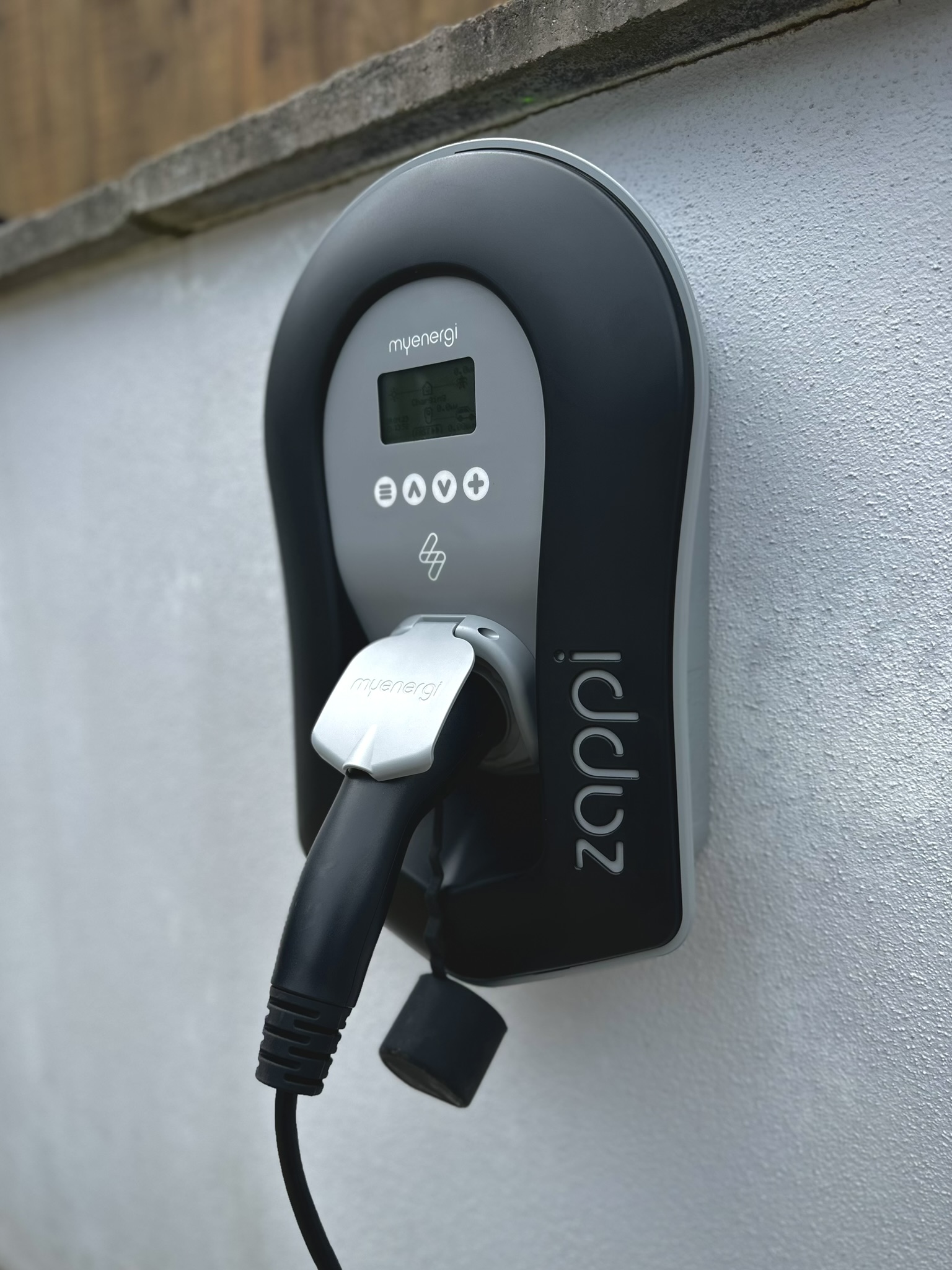
How much does it cost to install an EV charger at home in the UK
Thinking of getting an electric car? A common question is the cost of installing a home charger. For most standard UK homes, the total installed cost is between £850 and £2,000.
This price includes two key parts: the charger unit itself and the installation labour from a qualified electrician. The final price varies mainly due to the complexity of the installation, for example, the distance from your fuse box to your driveway. This guide breaks down each cost component so you know what to expect.
Summary
Most UK home EV charger installations cost between £850 and £2,000, combining a £400 to £800 unit and £450 to £900+ labour, with price driven by cable run length, installation complexity, and any consumer unit upgrade (£350 to £900). A 7kW smart charger is the best-value standard for single-phase homes; a tethered cable adds about £50 to £100 for convenience and smart features can reduce running costs on off-peak tariffs. A "standard installation" assumes a sub-10m external cable run; longer runs, drilling, hidden routes, or trenching increase the quote. Renters and flat owners can get up to £350 off via the EV chargepoint grant; use an OZEV-approved installer and compare quotes.
Breaking Down the Bill: What You're Actually Paying For
First, there's the charger unit itself, the box that goes on your wall. This typically costs between £400 and £800. The price difference often comes down to the brand, its "smart" features, and whether you want a charger with the cable permanently attached.
Then you have the installation. The labour cost for installing an EV charger usually lands between £450 and £900+. For tricky jobs requiring long cable runs or groundwork, the labour can easily cost more than the unit itself, which explains the wide range in prices.
Tethered vs. Untethered: Does a Built-in Cable Justify the Cost?
Your first big decision is whether to go 'tethered' or 'untethered'. A tethered charger is like a petrol pump, the cable is permanently attached. You just park and plug it straight into your car.
An untethered charger is simply a socket. You use the separate cable that likely came with your car, which you'll need to get out of the boot each time. The main benefit of tethered is pure convenience, especially on a dark, rainy night. The trade-off is that an untethered unit looks a little neater on the wall.
This convenience typically adds between £50 and £100 to the unit's price. When looking at the total installation cost, it's a relatively small premium for daily simplicity.

How Fast Do You Need to Charge? Decoding 3.7kW vs. 7kW
Your next choice is charging speed, measured in kilowatts (kW). Think of it like the flow rate of a tap, a higher number means faster charging. For most homes, the decision is between a slower 3.7kW unit or the standard 7kW charger.
Almost every UK home has 'single-phase' power, making a 7kW charger the fastest option for most. In real-world terms, this adds around 30 miles of range for every hour it's plugged in, which is enough to fully charge most EVs overnight. This reliable performance is why a 7kW unit is considered the UK standard.
Since the installation work and cost are nearly identical for both speeds, it is simply better value to get the faster 7kW unit. This is a key factor where spending nothing extra gets you significantly more performance.
Is a 'Smart' Charger Worth an Extra £50? Yes
Beyond its speed, a charger's 'smarts' have the biggest influence on your running costs. A smart charger connects to the internet, allowing it to automatically charge when electricity is cheapest, typically in the middle of the night. Think of it as a clever thermostat for your car, always hunting for the lowest price.
To unlock these savings, you'll pair your charger with a special EV electricity tariff. These plans offer incredibly low rates for off-peak hours and can save drivers hundreds of pounds each year compared to a standard tariff.
New government regulations now require that any new charge point must be smart. While this mandate affects the price, the long-term savings mean the technology quickly pays for itself, making your EV even cheaper to run.
Decoding the Quote: What a 'Standard Installation' Covers
When you get a quote, you'll likely see a price for a 'standard installation'. This is the best-case scenario and assumes your chosen spot for the charger is less than 10 metres from your fuse box, with the cable clipped neatly to an outside wall.
Many homes, however, require a 'custom' job. The price increases if the work is more complex. Common reasons for extra costs include:
- A cable run longer than 10 metres
- Drilling through thick stone or concrete walls
- Needing to run cables under floors or through ceilings
- Digging a trench to bury the cable to a detached garage or parking spot
One of the most significant extra costs is a consumer unit (fuse box) upgrade. If your current unit is old, full, or doesn't meet modern safety standards, it will need to be replaced. This is a non-negotiable safety step that can add between £350 and £900 to your bill.
Can You Get a Grant for Your EV Charger? 2024 UK Rules
A common question is whether government grants are still available. While the grant for homeowners in houses ended in 2022, key support remains for many people in the UK.
The current EV chargepoint grant is aimed at renters and people living in flats. If you rent any type of property or you own a flat, you likely meet the eligibility criteria. The grant provides up to £350 off the total cost of the charger and its installation.
The process is simple: an OZEV-approved installer will check your eligibility, claim the grant on your behalf, and automatically deduct the value from your final bill.
Your Next Steps: How to Get a Reliable Quote
Your next step is to find an approved installer and get a quote. While you might ask if a normal electrician can install a car charger, only certified specialists have the required training to handle the specific safety demands, ensure your warranty remains valid, and issue the necessary EIC (Electrical Installation Certificate) and BCN (Building control notification).
By choosing a certified professional and requesting multiple quotes, you are ensuring a safe, compliant installation that will provide years of effortless home charging.


.jpg)


.JPG)


